Program Overview
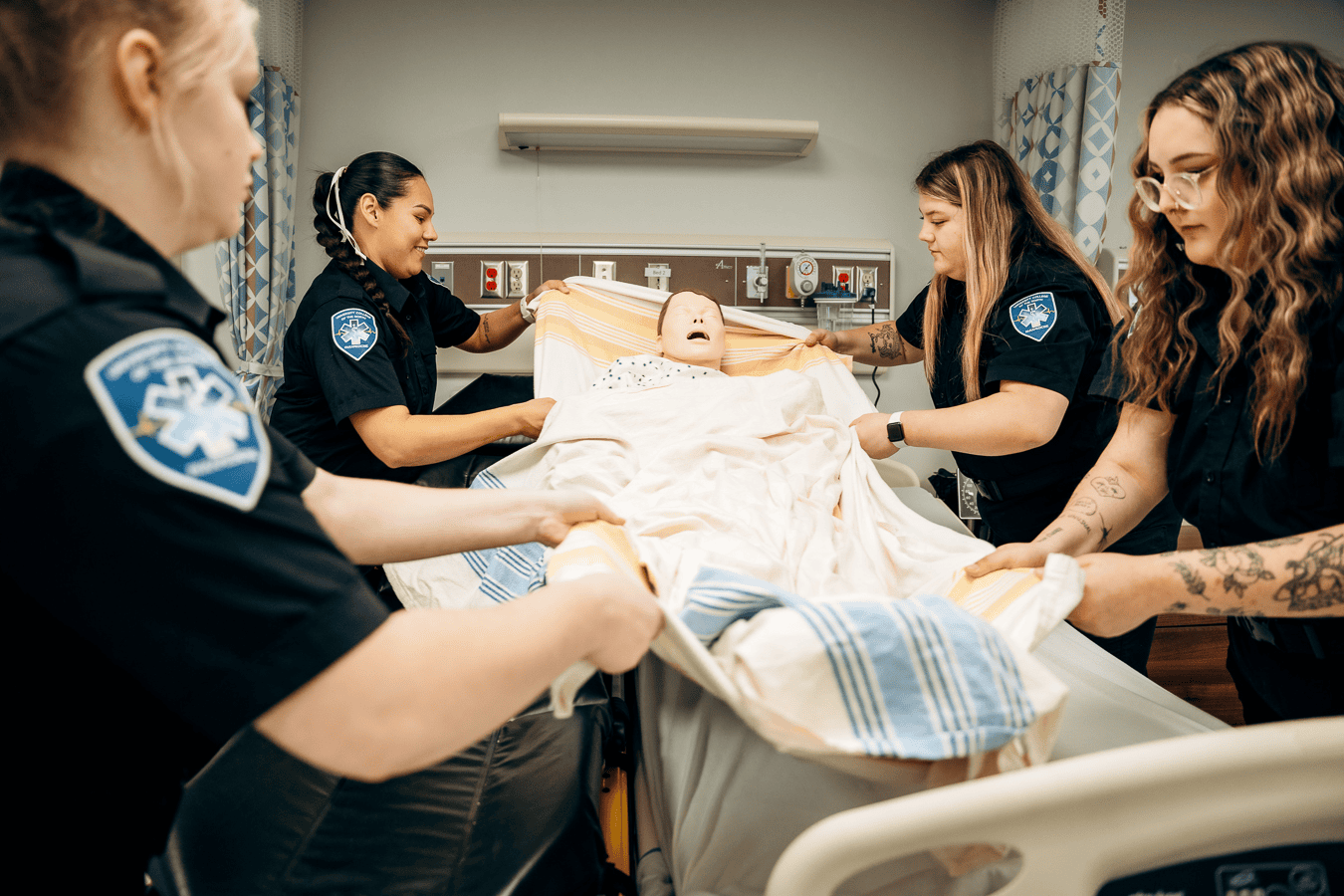
The Primary Care Paramedic (PCP) program is a full-time program that combines independent study, weekly online Zoom classes, and face-to-face skills lab weeks. Students gain valuable hands-on experience through labs and scenario-based training. The program structure allows students to remain employed in their home communities, if they wish, while expanding their knowledge & skills. Students are required to attend ALL monthly skills lab weeks in person at either The Pas or Thompson Campus.
The theory and skills portion of the program is delivered from September to June, with clinical practicums in late June for year 1 and June – August for year 2.
Students can exit the program after the first year, receive an EMR certificate, write the national EMR COPR exam, and, in turn, become licensed by the College of Paramedics of Manitoba to practice as an EMR. Upon completing the first year, all students will receive a certificate necessary for eligibility to sit the national exam. Although the decision to take the national exam is voluntary, it is recommended as it enhances success in passing the PCP national exam.
For students who wish to exit after the first year, there is a time limit for them to return to complete the second year of the PCP diploma program. Students who opt not to work as an EMR will have one year to return and complete the second year of the PCP program. Students who choose to work as EMRs will have up to four years to return to complete the PCP program.
Students need to maintain a B grade for all PAR courses and a C grade for Anatomy and Physiology and Introduction to Aboriginal Studies.
Why Study Primary Care Paramedic at UCN?
The graduate will be able to:
- Recognize the nature and seriousness of the patient’s condition or extent of injuries, assess, manage and administer appropriate emergency medical care based on assessment findings, as outlined in the Pan-Canadian Essential Regulatory Requirements (PERRs) Canadian Paramedic Competency Framework objectives in the area of Care Along the Health & Social Continuum.
- Lift, move, position, transport, and otherwise handle the patient to minimize discomfort and prevent further injury, as outlined in the PERRs objectives in the area of Health.
- Perform the expectations of the job description safely and effectively, as outlined in the PERRs objectives in the area of Health and Safety and Integration.
- Promote professional qualities and attributes that advance Paramedicine as a profession, as outlined in the PERRs objectives in the area of Professionalism and Communications.
- Provide enhanced skills and therapeutic interventions as permitted by the regulatory body and medical treatment protocols.
- Identify individuals who may benefit from additional community resources and liaise with other healthcare and social service agencies to make specific resources available to improve healthcare outcomes.
Career Outcomes and Community
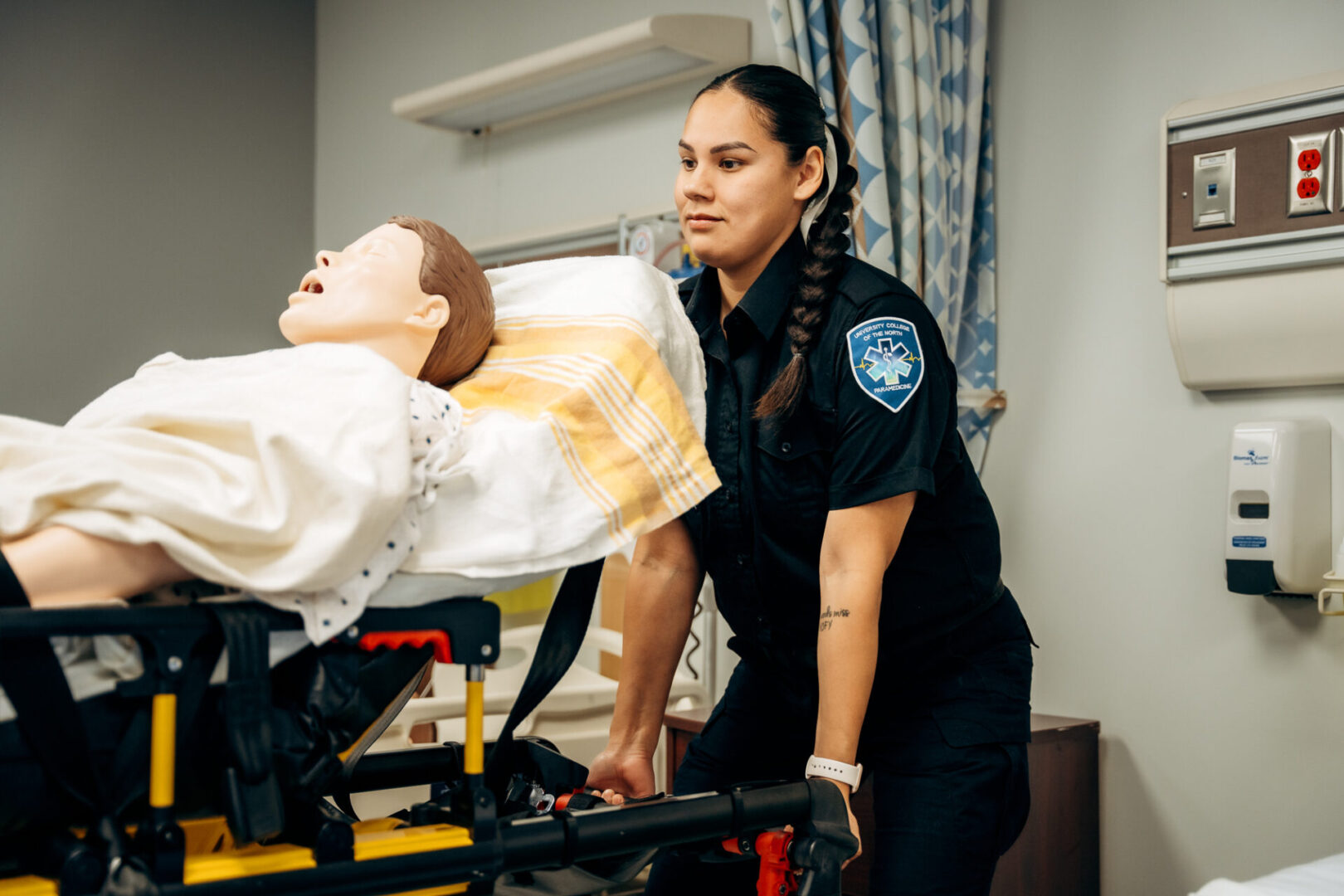
The Paramedic provides a service in an environment requiring specialized skills and knowledge. Paramedics deliver pre-hospital care and typically work for municipal, civic, regional, or private ambulance services. The nature of calls can range from transporting a stabilized patient between hospitals to responding to emergency 911 calls. There are also increasing opportunities for Paramedics in community programs, industrial areas and other sectors.
Graduates of the Primary Care Paramedic (PCP) program may use the title Primary Care Paramedic and seek employment after successfully passing the Canadian Organization of Paramedic Regulators (COPR) Entry to Practice Examination. Students must write the COPR exam within 12 months of completing the PCP program and are permitted a maximum of three attempts. The cost for each attempt is approximately $750.00, which is the sole responsibility of the student.
Find out more about paramedic licensure on the College of Paramedics Manitoba website.
Search for careers on the Shared Health website or Winnipeg Fire/Paramedic Services
Program Schedule
| Course | Course Title | Credits |
|---|---|---|
| ABS 1001 | Waskawimakanwa Mecimwaci Isihtwawina | 1 |
| ANS 1000 | Introduction to Aboriginal Studies 1 | 3 |
| BIO 1415.L | Human Anatomy | 3 |
| PAR 1100 | Introduction to Emergency Care and Professionalism | 6 |
| PAR 1110 | Documentation and Communication | 3 |
| PAR 1115.L | Airway Management and Vital Signs | 3 |
| BIO 1420.L | Human Physiology | 3 |
| PAR 1120.L | Patient Assessment and Diagnostics | 3 |
| PAR 1125.L | Core Skills 1 | 3 |
| PAR 1130 | Pharmacology and Drug Administration 1 | 3 |
| PAR 1135 | Medical Emergencies 1 | 3 |
| PAR 1140 | Trauma Emergencies 1 | 3 |
| PAR 1145 | Obstetrics, Gynecology and Neonatal Resuscitation | 3 |
| PAR 1150 | Special Considerations | 2 |
| PAR 1155 | Rescue Practices | 1 |
| PAR 1160 | Clinical Practicum 1 | 1 |
| PAR 1165 | EMR COPR Preparation | 3 |
| PAR 2100 | Pharmacology and Drug Administration 2 | 3 |
| PAR 2105 | Cardiovascular Emergencies with ECG | 6 |
| PAR 2110.L | Core Skills 2 | 3 |
| PAR 2115 | Respiratory Emergencies | 3 |
| PAR 2120 | Medical Emergencies 2 | 4 |
| PAR 2125 | Trauma Emergencies 2 | 3 |
| PAR 2130 | Emergency Vehicle Operations | 3 |
| PAR 2135 | Preparing for Practice | 3 |
| PAR 2140.L | Core Skills 3 | 3 |
| PAR 2145 | PCP COPR Preparation | 3 |
| PAR 2150 | Clinical Practicum 2 | 2 |
| PAR 2155 | Ambulance Practicum | 5 |
Admissions
Requirements
- Grade 12 graduate or equivalency, and
- English 40S, and
- Pre-Calculus Mathematics 40S, Applied Mathematics 40S or Essential Mathematics 40S, and
- Chemistry 40S, Biology 40S or Physics 40S
A minimum grade of 60% is required in each of the three 40S courses, however a higher grade is recommended as admission may be competitive.
Estimated Cost
Year 1: $11,634.81
Year 2: $7,193.17
Cost Sheets
Primary Care Paramedic – Year 1 – Thompson →
Primary Care Paramedic- Year 1 – The Pas →
Primary Care Paramedic- Year 2 – The Pas →
Primary Care Paramedic – Year 2 – Thompson →
Application Fee
- Domestic Student Application Fee: $52
- International Student Application Fee: $164
Non-Academic Program Requirements
All students must meet the Non-Academic Requirements. Any costs associated with the Non-Academic Admission Requirements are the student’s responsibility.
Child Abuse Registry Check – Applicants must provide a Child Abuse Registry check by June 1. As it can take up to 120 days to obtain this document, it is recommended that applicants apply for the Child Abuse Registry check between March 1 and March 15 in the year of application. Any applicant on the Child Abuse Registry will be denied admission.
Adult Abuse Registry Check – Applicants must provide an Adult Abuse Registry check by June 1. As it can take up to 120 days to obtain this document, it is recommended that applicants apply for the Adult Abuse Registry check between March 1 and March 15 in the year of application. Any applicant on the Adult Abuse Registry will be denied admission.
Criminal Record – Applicants must provide a Criminal Record Search Certificate, including Vulnerable Persons Search, by June 1. As it can take up to 120 days to obtain these documents, it is recommended that applicants apply for the Criminal Record Search certificate and Vulnerable Persons Search between March 1 and March 15 in the year of application. A criminal conviction will not necessarily result in denial of admission to the PCP program. However, criminal offences will be reviewed by Shared Health and a determination will be made as to the availability of clinical placements for the student in question.
Immunization – Applicants must submit their immunization record by June 1. As it may take a number of months to complete the immunization requirements, it is recommended that all applicants start their immunizations in November, prior to application, in order to meet the June 1 deadline.
Manitoba Class 4 Driver’s License – – During the first year of the program, students are to acquire a Manitoba Class 4 Driver’s License. Process and requirements to obtain the MB Class 4 Drivers Licence can be found here: Professional Driver’s Manual_MPI
Tablet/Computing Electronic Requirements – For the duration of the program, all students must have an Apple iPad with the latest version of iOS or an Android device (tablet or phone) for the competency tracking software. Students are also required to have a computer and internet connection, either via WiFi or a high-speed cellular connection for Zoom classes.
Transfer from other Programs – Transfer requests from other institutions/programs will be assessed individually. The Faculty of Health requires supplemental information for applicants who have attended but have not completed a professional health-related program at another institution in addition to the required admission requirements. Please refer to Policy AC-03-15 Supplemental Information for Applicants from Professional Health-Related Programs.
Important Dates and Deadlines
Students are required to be on campus (The Pas or Thompson) for ALL skills weeks.
Program Orientation
September 1 & 2, 2026
UCN Orientation
September 3 & 4, 2026
Program Start Date
September 8, 2026
Mandatory Skills Lab Weeks Year 1
Term 20
September 21 – 25, 2026
October 19 – 23, 2026
November 16 – 20, 2026
December 14 – 18, 2026
Term 30
January 18 – 22, 2027
February 8 – 12, 2027
March 8 – 12, 2027
April 5 – 9, 2027
April 19 – 23, 2027
Term 40
May 17 – 21, 2027
June 7 – 11, 2027
Mandatory Skills Lab Weeks Year 2
Term 20
Sept 8 & 9, 2026
October 5-9, 2026
October 26-30, 2026
November 23-27, 2026
December 14-18, 2026
Term 30
January 25-29, 2027
February 22-26, 2027
March 15-19, 2027
April 12-16, 2027
Term 40
May 10-14, 2027
(All dates subject to change)
Forms and Documents
Occurrence/Incident Report Form and the Non Medication Unusual Occurrence Incident Report Form (Students are to complete a form as soon as possible following an incident or occurrence that has taken place during a clinical rotation, whether it is a near miss or an actual error.)
Immunization: click on this link to access a copy of the UCN Health Programs Immunization form